Inclusive Research · Unscroll
Most ADHD research starts from what's broken. I wanted to start from what people actually needed.
Unscroll is an assistive mobile app concept for adults with ADHD that turns unplanned scrolling time into supportive "micro-moments" for focus, time management, and anxiety reduction. It combines calendars, timers, and reminders into one ADHD-aware system that nudges users just enough to move toward what matters, without shaming or overwhelming them.
- Role
- Co-researcher & co-designer, group project
- Timeline
- 10 weeks
- Contribution
- Research, participatory design, prototyping
Where it started
"How might we design an inclusive, customizable assistive tool that supports adult ADHD users' everyday routines without adding more overwhelm?"
Adults with ADHD rely on a patchwork of timers, calendars, alarms, and notes, but still struggle with time blindness, disorganization, scattered tools, and emotional overload. Existing apps often use deficit-based framing, are built without neurodivergent input, and don't account for cognitive load or executive function challenges.
- Understand: day-to-day experiences of adults with ADHD around focus, time, and technology.
- Co-create: a concept that consolidates key supports, time, focus, reminders, into one ADHD-aware assistant.
- Prototype: an interaction model for "nudges" that feels supportive, not punitive, grounded in inclusive design and accessibility guidelines (DIX, WCAG, Microsoft Inclusive Design).
Concept in one breath
Unscroll is an ADHD-friendly companion app that gently nudges adults from endless scrolling into small, manageable actions by combining schedules, app-usage limits, and stress-aware reminders in one place.
Research
Literature review
We examined HCI and ADHD research to understand gaps in existing tools.
-
Observed
Only a small fraction of HCI work mentions neurodivergence at all, and ADHD is a minority within that. Most ADHD technology research focuses on children, leaving adult needs under-served, and tools often assume a deficit model, ignoring social and environmental barriers.
-
Inferred
Effective support for adults must emphasize customization, real-time feedback, minimal distractions, and affordability. This pushed us toward the social model of disability and cognitive accessibility, framing ADHD not as an individual "failure," but as a mismatch between design and cognitive styles.
Mixed-methods user research
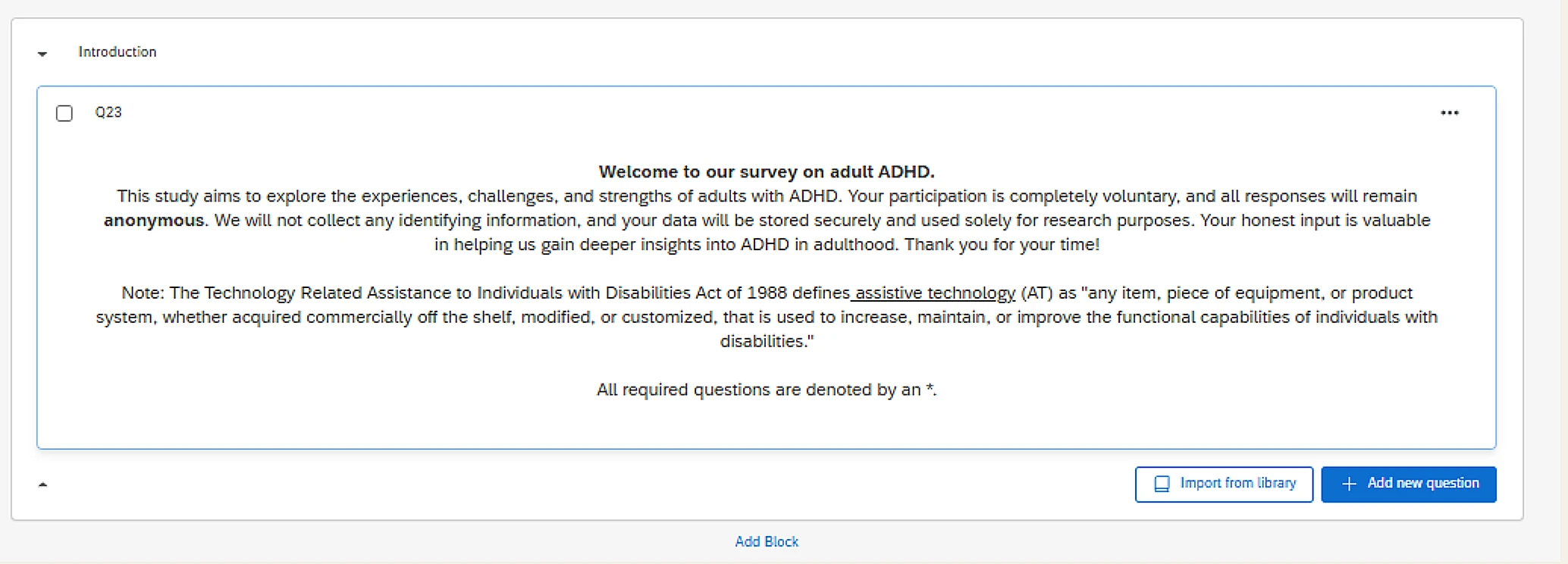
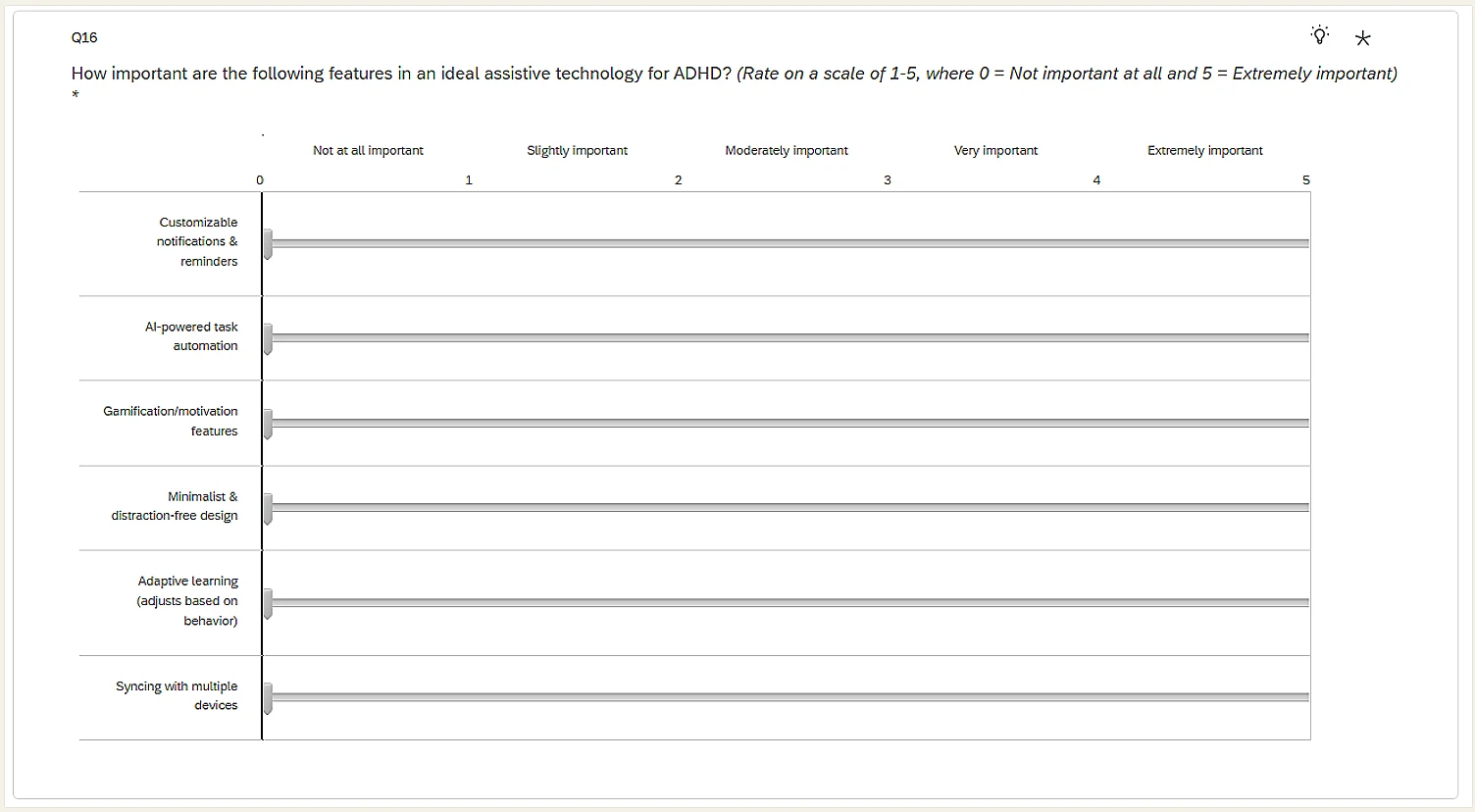
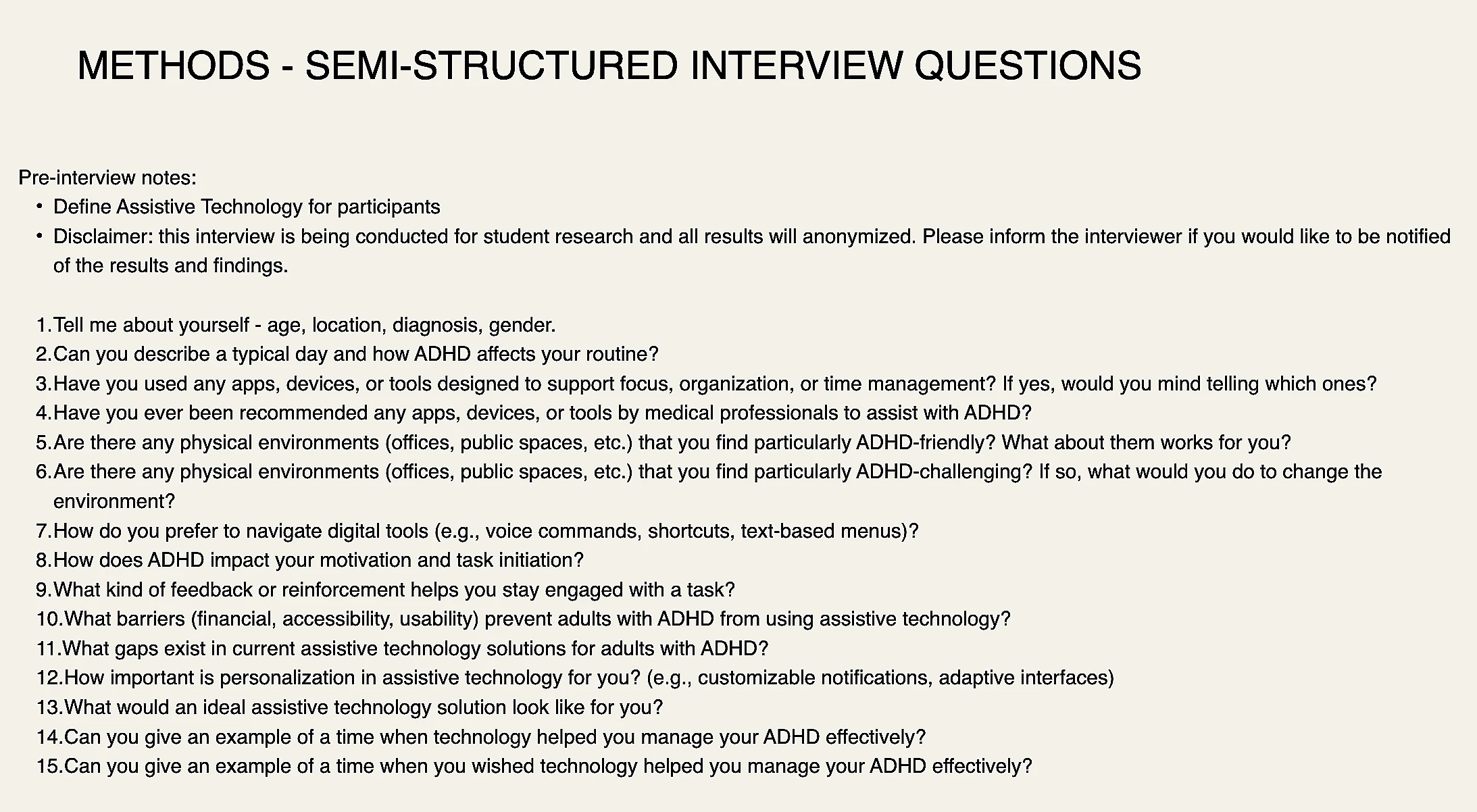
We used a mixed-methods approach to get both breadth and depth, a 16-person survey (Qualtrics) and 5 semi-structured interviews with adults with ADHD, looking for common patterns across attention, time, memory, task initiation, and anxiety.
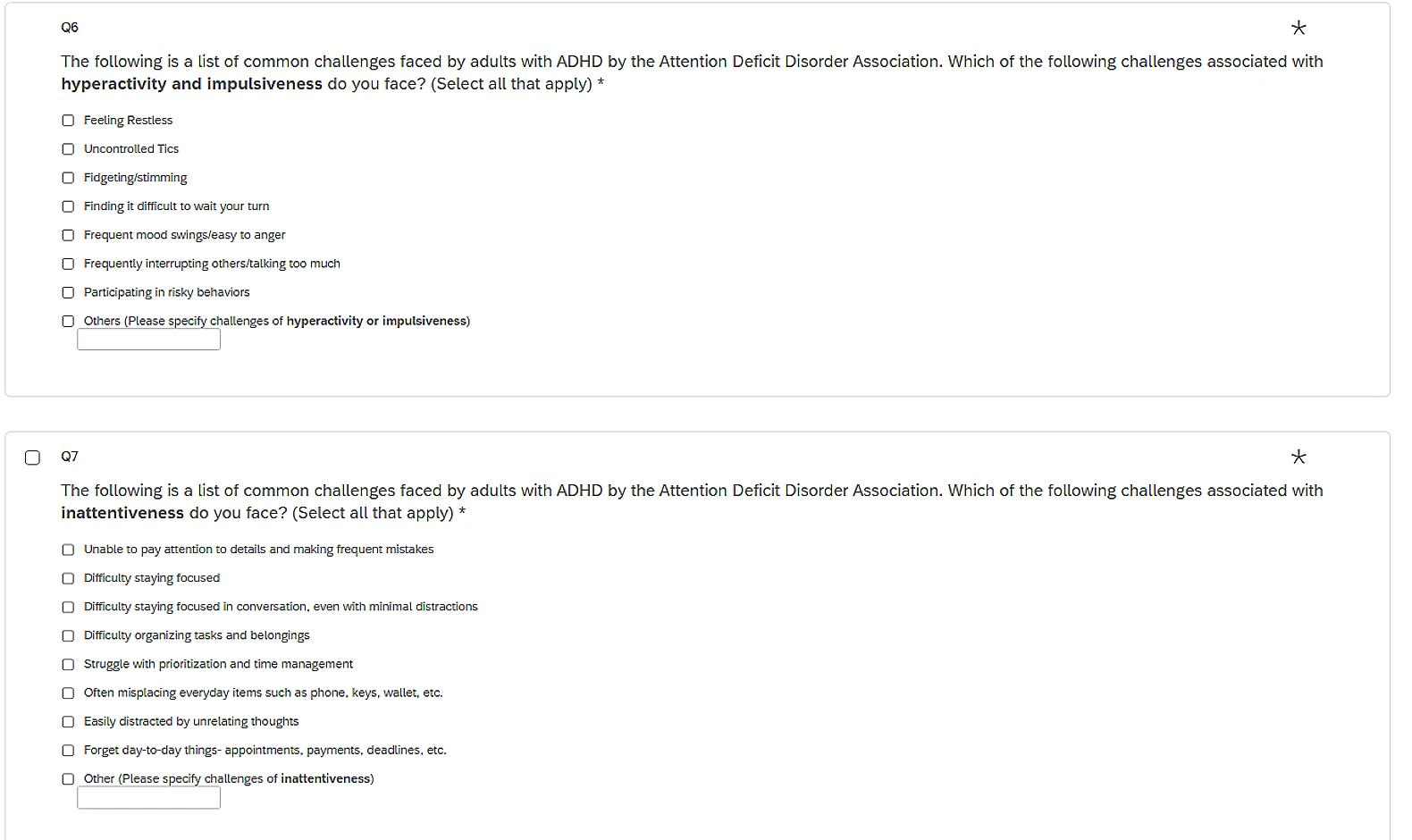
- Attention & focus: distraction with boring or unstructured tasks, environmental noise, hyper-fixation.
- Time & task management: running late, losing track of time, feeling constantly behind.
- Memory: forgetting appointments, losing important objects.
- Task initiation & completion: procrastination on overwhelming or tedious tasks.
- Anxiety: rumination, self-doubt, feeling misunderstood.
People wanted tools that help with focus, time, anxiety, and memory, not just more to-do lists.
Observed, from the interviews (5 adults with ADHD)- Time blindness: difficulty sensing how long things take or when to switch tasks.
- Forgetfulness & disorganization: missed appointments, scattered reminders.
- Hyperfocus vs. avoidance: either stuck on one thing or avoiding tasks entirely.
- Emotional regulation: existing tools rarely address stress, guilt, or overwhelm.
- Scattered assistive tools: no single place that combines focus, reminders, and time tracking.
"I tend to... I don't want to say work better under pressure, but it's like when I'm forced to have to do something. That's when I'm like, OK, I can get this done, but if I have a bunch of time, I'm like... Just I can do that later, you know."
"My day is just reminders all throughout the day to either complete something or to move on."
- Smart nudges timed around appointments and habits.
- Support for transitions and task switching.
- A more holistic view of the day, not just a list of tasks.
ADHD isn't automatically a user failure, sometimes the design itself creates the mismatch.
From research to concept
Ideation & participatory design
We synthesized the survey and interview data into four key challenge areas: task and time management, focus, memory, and anxiety. In ideation sessions, we generated "wild ideas" for how a tool could gently intervene when someone is doomscrolling or losing track of time.
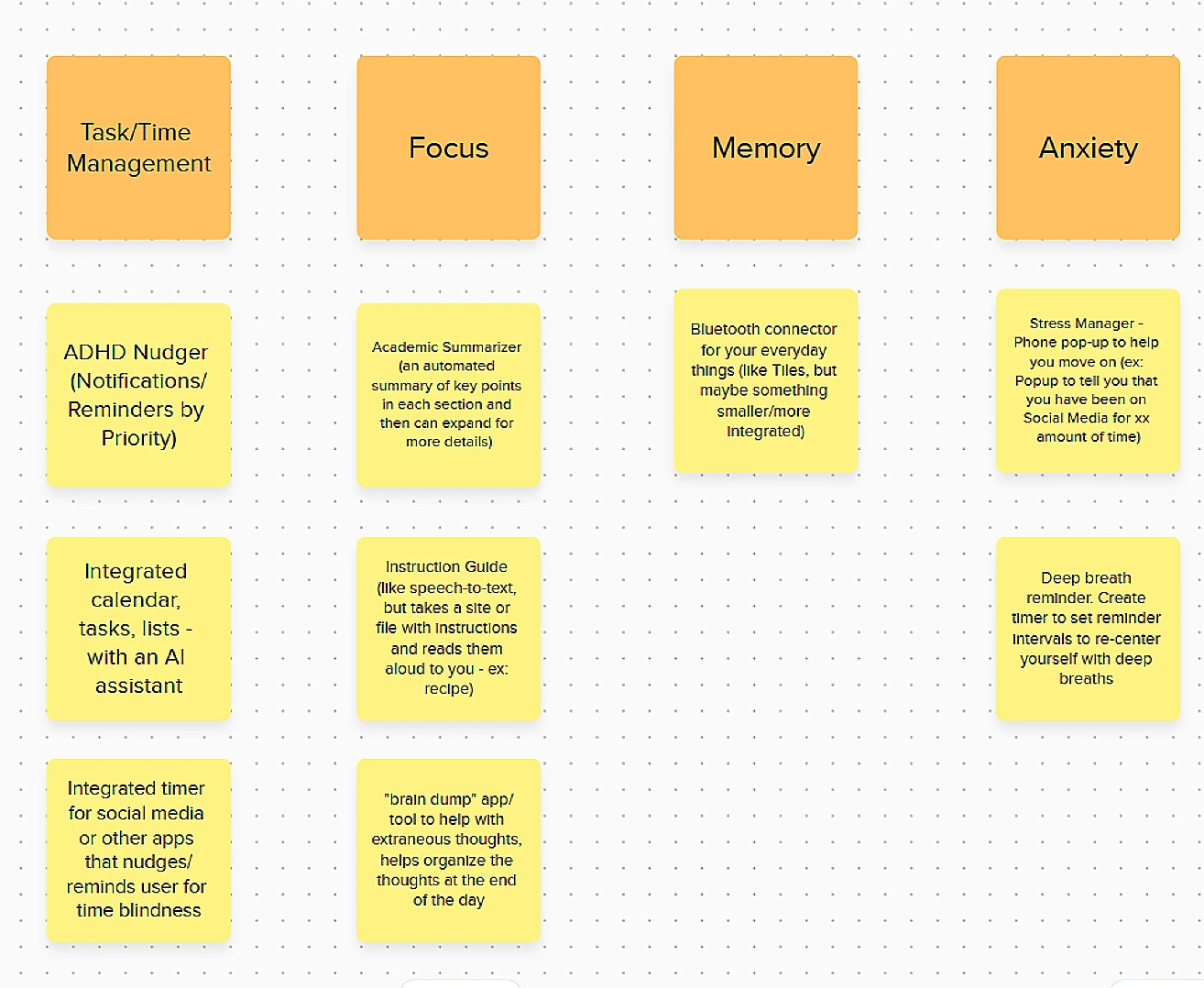
- Co-selected the Unscroll concept directly with ADHD participants.
- Co-designed features: linking to calendar and schedule, app-usage limits and nudges during social media use, read-aloud schedules, gamified rewards and streaks.
- Refined examples of nudges that participants found motivating versus shaming.
Prototyped in Figma
Home screen, nudges, and gamification
Home screen: a snapshot of the day, upcoming events, top 3 priorities, and recent streaks, plus widgets for timers and the next nudge.
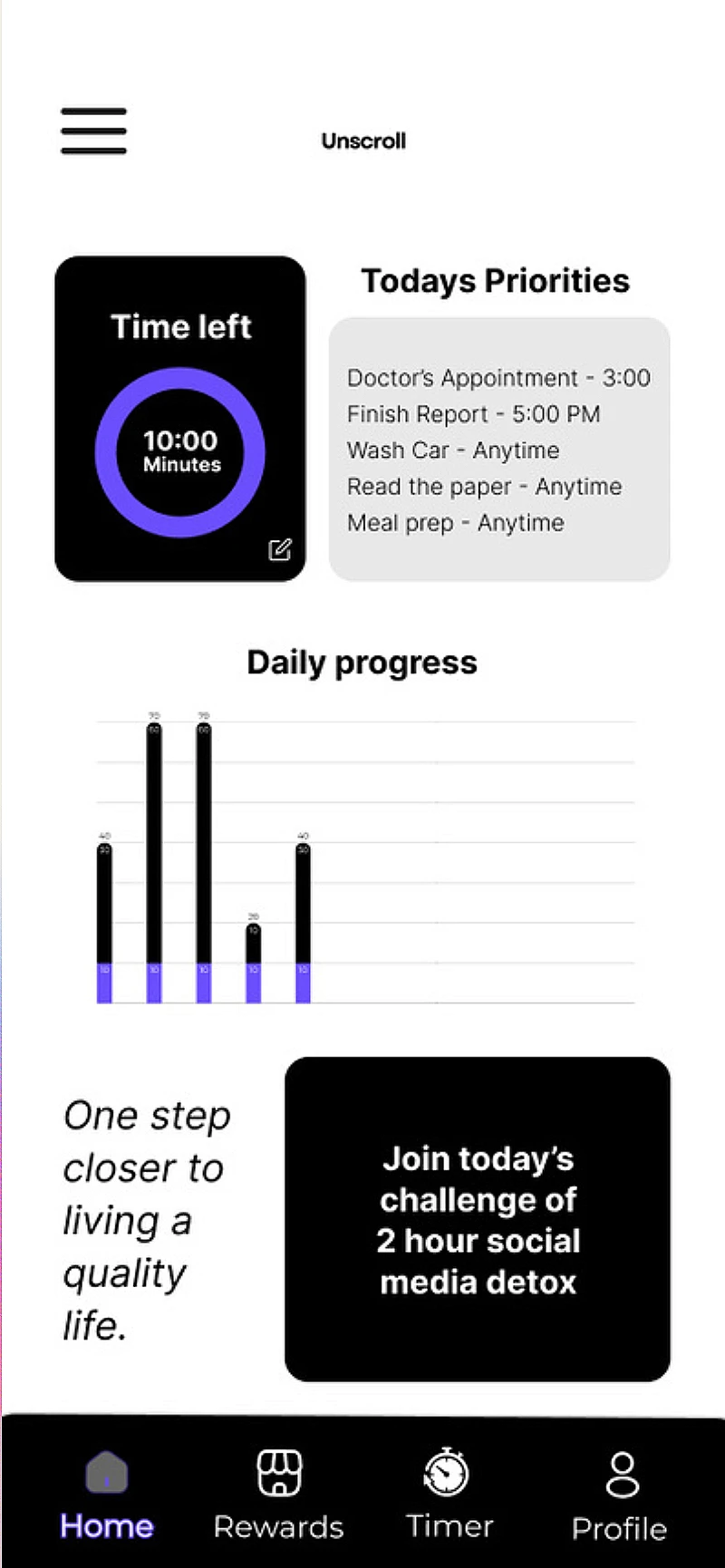
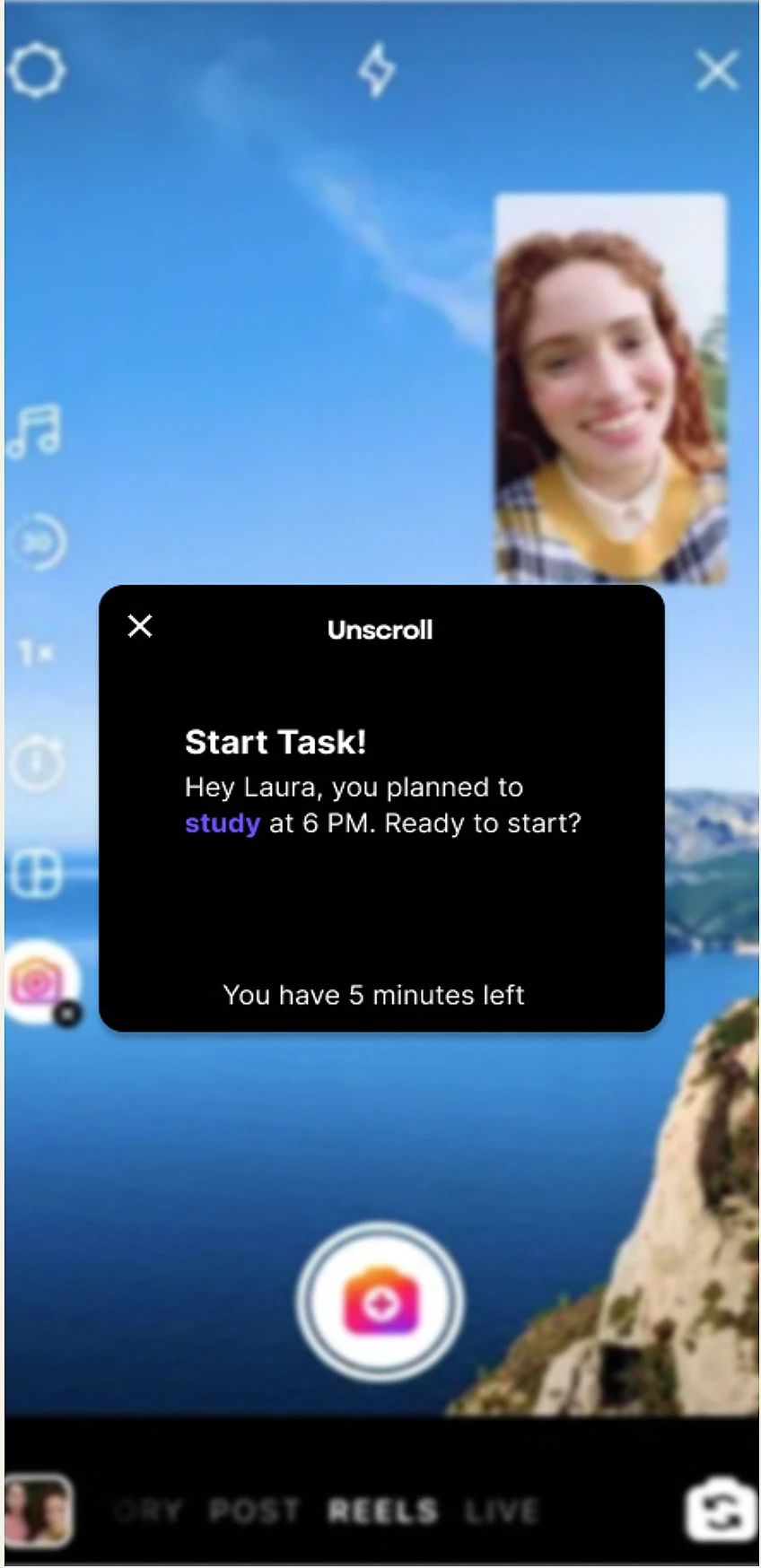
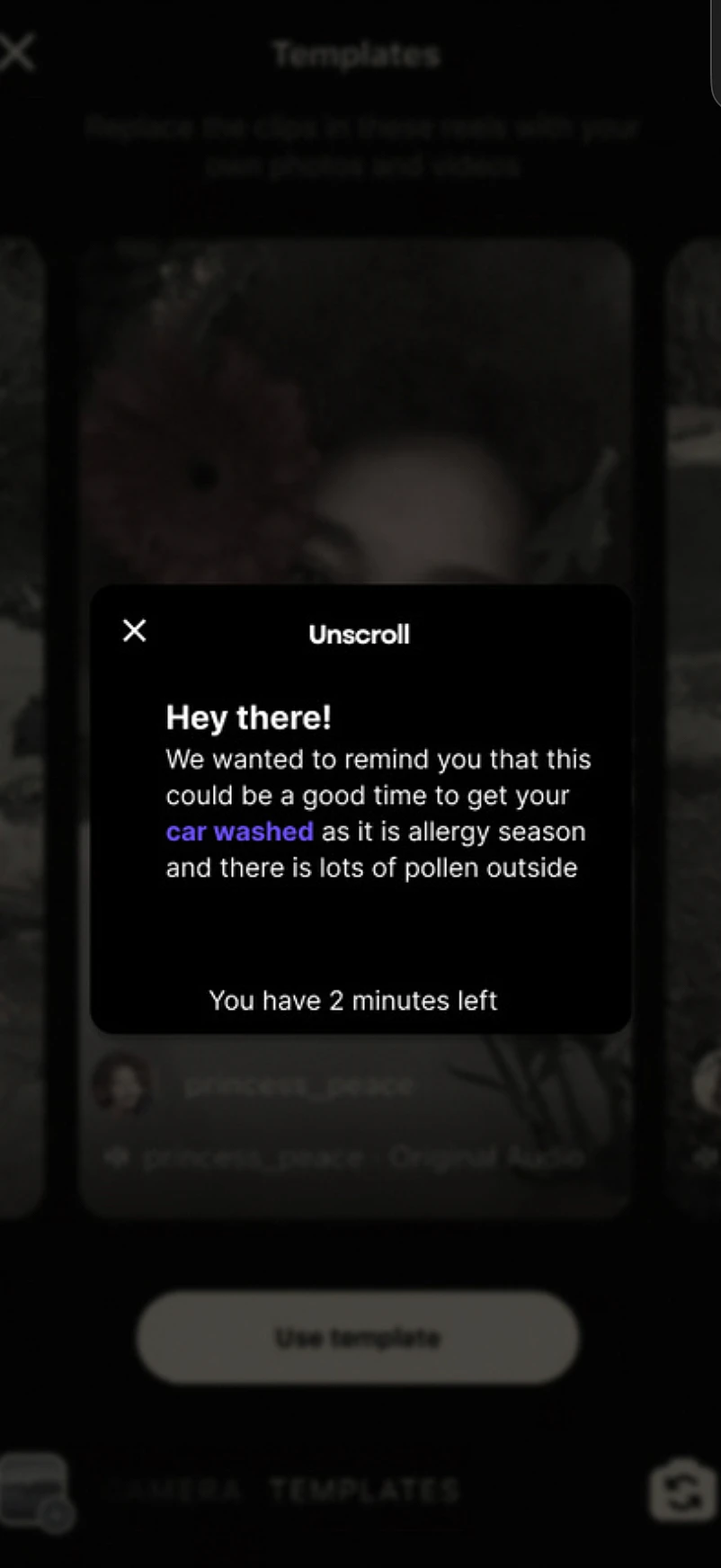
Three nudge intensities, so the app can match how urgent a moment actually is instead of treating every distraction the same way.

Task & schedule integration
- Users set priorities and time windows.
- Unscroll uses those priorities to decide when to nudge and how strongly.
- Users can mute or down-rank certain tasks to avoid overload.
Gamification
- Streaks for days with fewer dismissed nudges.
- Rewards for completing tasks on time.
- A place to store possible coupons or rewards from partner companies (future idea).
What makes it work
Interaction model
Click a card below to see each principle.
-
Right moment, right channel
Unscroll looks at time, schedule, and current app use to send nudges when you're most likely to act, before a meeting, late-night scrolling, or just as a focus block is about to start.
-
Always in your control
Nudges always give clear choices, do now, snooze, or override, keeping users in charge.
-
Nudge intensity that adapts
Reminders start gentle and only get firmer as deadlines approach or priorities rise.
-
Progress that feels doable
Simple streaks and daily summaries highlight what did get done, reducing shame and building motivation.
What we delivered
-
Delivered
A research-grounded problem framing for adult ADHD and assistive technology, a participatorily co-created concept for Unscroll, a hi-fidelity prototype showing the home screen, nudge flows, scheduling logic, and gamification elements, and a clear interaction model for nudges (soft, firm, direct) tied to time, priority, and app usage.
The project was well received in class as a concrete example of applying accessibility principles and the social model of disability to cognitive differences, not just physical or sensory impairments.
Accessibility & inclusive design
- Treat ADHD as a disability interaction problem, a mismatch between user and environment, rather than an individual failure.
- Be open and scalable, designed to be affordable and also useful to non-ADHD users who struggle with focus.
- Follow inclusive design principles: design with the "extremes" (ADHD adults) to improve the experience for everyone.
What I learned
Tested- From symptoms to systems. My psychology background helped me see ADHD not just as a list of symptoms, but as a set of interactions between attention, environment, and technology. Translating those dynamics into UX decisions, like nudge timing and wording, showed me how design can either reinforce stigma or reduce it.
- Participatory design. Working directly with adults with ADHD through interviews and co-design made it obvious that generic productivity apps miss emotional realities like shame, anxiety, and burnout. For neurodivergent users, co-creation isn't a nice-to-have, it's the only way to avoid harmful assumptions.
- Nudges must respect autonomy, not just behavior change. The same nudge can feel either supportive or controlling. Designing Unscroll taught me to focus on autonomy-supportive microcopy, flexible settings, and opt-out mechanisms so users feel in control, especially when their executive function already feels fragile.
- Refine nudge tone and timing through usability testing with more adults with ADHD, to avoid overwhelm or annoyance.
- Add a personalization layer for energy levels, routines, and sensory preferences (e.g. quiet mode, fewer visuals).
- Build a cross-device ecosystem (mobile plus wearables or desktop) so nudges follow the user without duplicating alerts.
- Run a longitudinal impact study on time awareness, task completion, and stress over weeks or months.
- Work through data ethics and transparency: clear controls for tracking, data sharing, and reward partnerships.